

Objectes multimèdia amb l’etiqueta: Centres docents
Resultats de la cerca
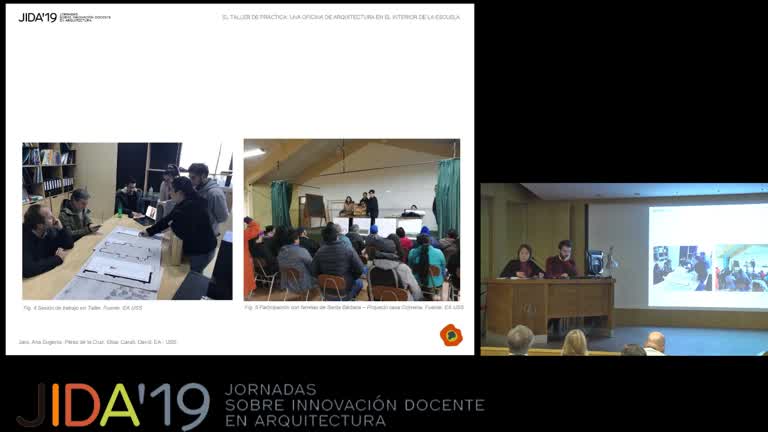
JIDA'19. BLOQUE IV El Taller de Práctica: una oficina de Arquitectura en el interior de la Escuela
Accés obert
14 de nov. 2019
Presentació de la ponència a càrrec d'Ana Eugenia Jara i David Caralt de la Facultad de Arquitectura Diseño y Arte. Universidad San Sebastián. (Xile)
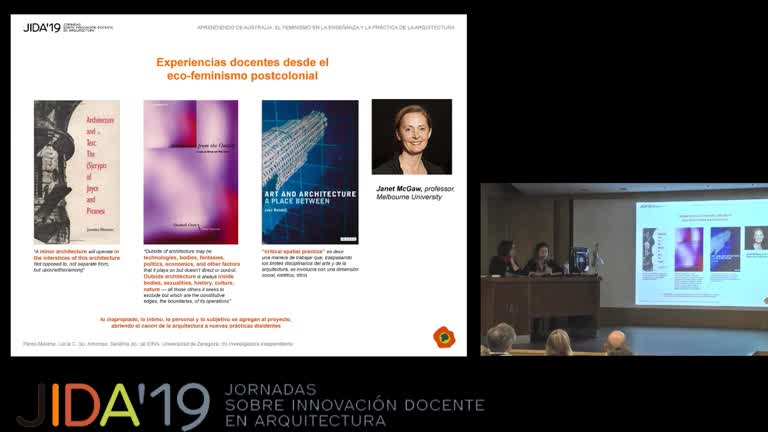
JIDA'19. BLOQUE IV Aprendiendo de Australia. El Feminismo en la enseñanza y la práctica de la Arquitectura
Accés obert
14 de nov. 2019
Presentació de la ponència a càrrec de Lucía C. Pérez Moreno, EINA, Universidad de Zaragoza i Serafina Amoroso, Investigadora independiente
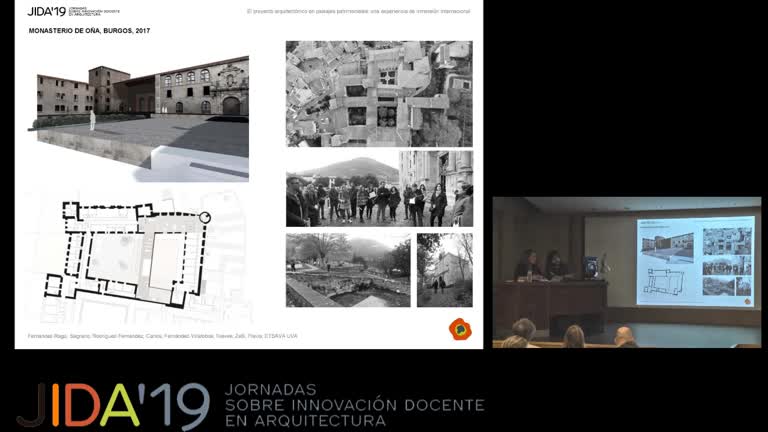
JIDA'19. BLOQUE IV El Proyecto Arquitectónico en paisajes patrimoniales: una experiencia de inmersión internacional
Accés obert
14 de nov. 2019
Presentació de la ponència a càrrec de Carlos Rodríguez Fernández i Nieves Fernández Villalobos de la E.T.S. Arquitectura, Universidad de Valladolid
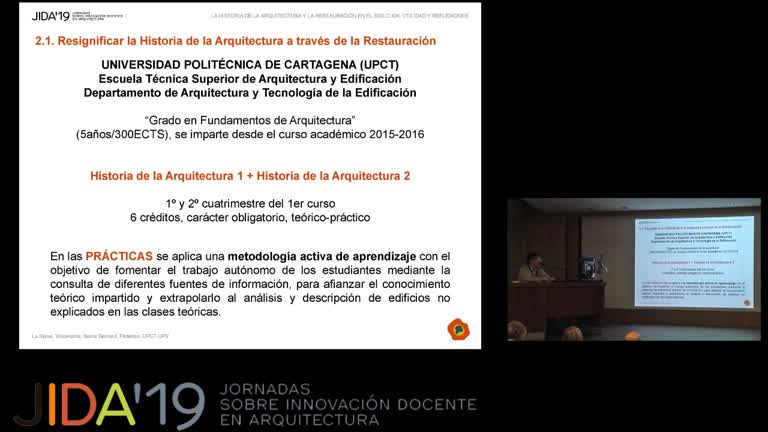
JIDA'19. BLOQUE IV La Historia de la Arquitectura y la Restauración en el siglo XXI: utilidad y reflexiones
Accés obert
14 de nov. 2019
Ponència a càrrec de Vicenzina La Spina, E.T.S. Arquitectura y Edificación de Cartagena, i Federico Iborra Bernad, E.T.S. Arquitectura de Valencia.
JIDA'19. BLOQUE III Debate
Accés obert
14 de nov. 2019
Debat del Bloc III de les Jornades moderat per Marta Muñoz de la Escuela Técnica Superior de Arquitectura, Universidad Politécnica de Madrid. ETSAM - UPM
JIDA'19. BLOQUE III Regletas urbanas. Moldear las estructuras del orden abierto
Accés obert
14 de nov. 2019
Presentació de la ponència a càrrec de Jesús Rodríguez Pasamontes; Rafael Temes Córdovez. E.T.S.Arquitectura de Valencia - UPV
JIDA'19. BLOQUE III Diarios creativos: el dibujar como germen del aprendizaje productivo
Accés obert
14 de nov. 2019
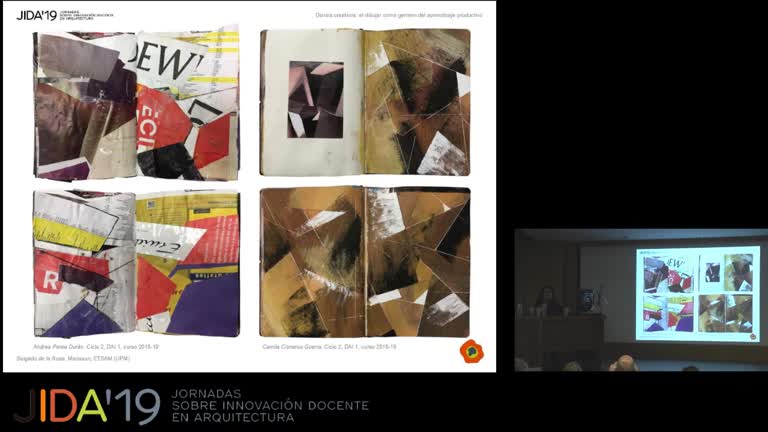
Presentació de la ponència a càrrec de Maria Asunción Salgado de la Rosa, E.T.S. Arquitectura de Madrid - UPM
JIDA'19. BLOQUE III Nuevas representaciones, nuevas concepciones: "Entender y hacer entender". MBArch ETSAB
Accés obert
14 de nov. 2019
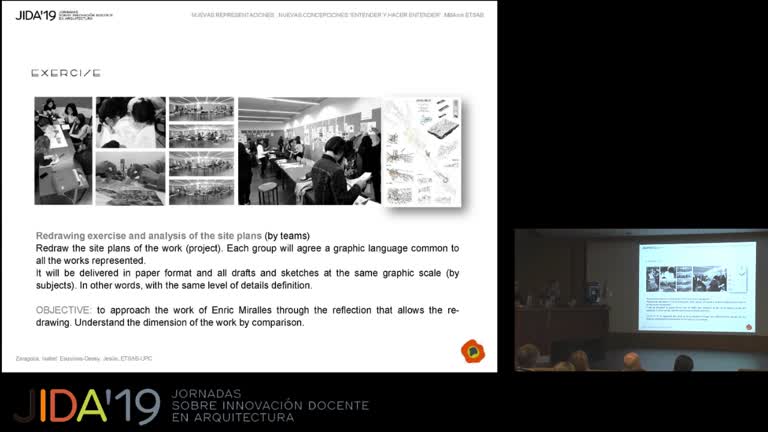
Presentació de ponència a càrrec d'Isabel Zaragoza i Jesús Esquinas Dessy, E.T.S.Arquitectura de Barcelona - UPC
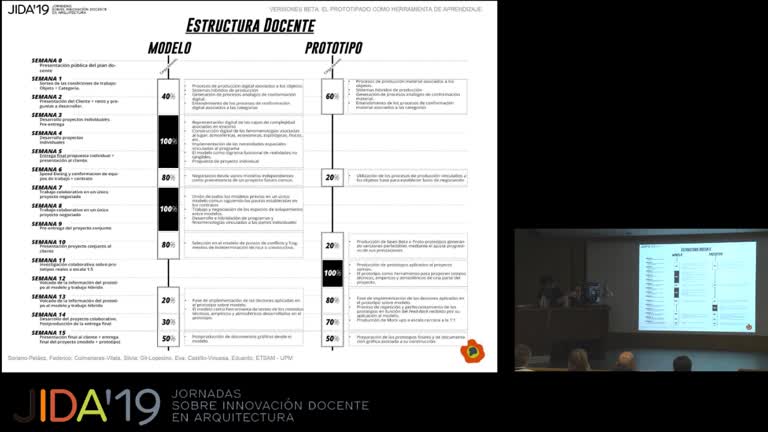
JIDA'19. BLOQUE III Versiones Beta. El prototipado como herramienta de aprendizaje
Accés obert
14 de nov. 2019
Presentació de la ponència a càrrec de Federico Fernández Peláez; Silvia Colmenares Vilata; Eva Gil Lopesino; Eduardo Castillo Vinuesa de E.T.S. Arquitectura de Madrid (ETSAM UPM)
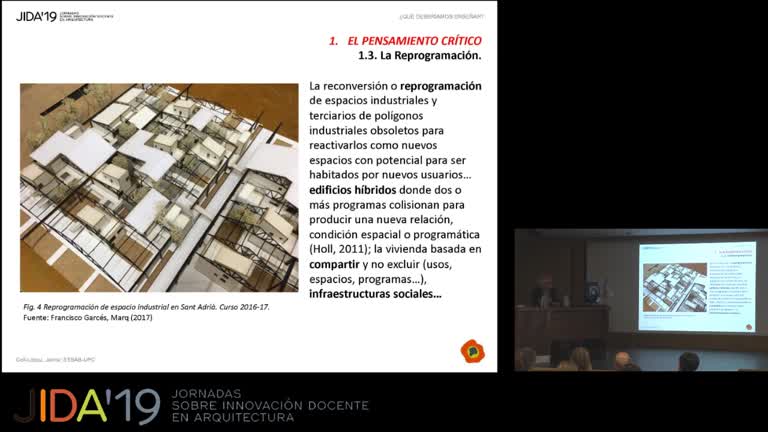
JIDA'19. BLOQUE III ¿Qué deberíamos enseñar? Reflexión en torno al Máster Habilitante en Arquitectura
Accés obert
14 de nov. 2019
Presentació de la ponència a càrrec de Jaime Coll López, Departament de Projectes Arquitectònics ETSAB - UPC
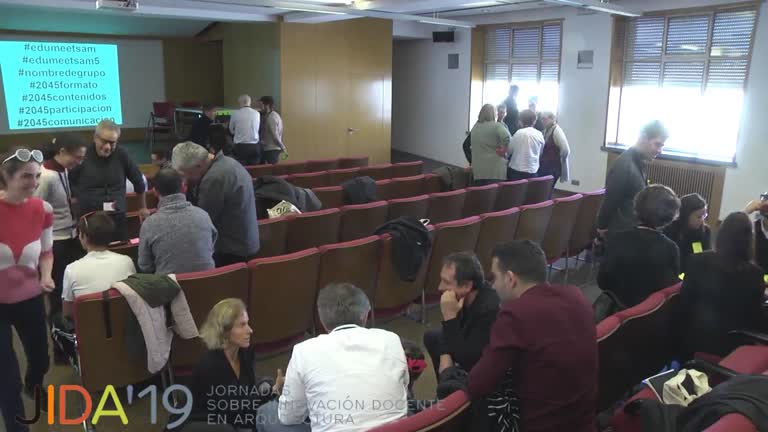
JIDA'19. BLOQUE II EDUMEETSAM V: ¿Cómo será este congreso dentro de 25 años?
Accés obert
14 de nov. 2019
Presentació del Taller a càrrec de les comisaries: María Mallo, Arantza Ozaeta, Raquel Congosto de la Escuela Técnica Superior de Arquitectura de Madrid (ETSAM - UPM)
JIDA'19. BLOQUE II Debate
Accés obert
14 de nov. 2019
Debat del Bloc II moderat per Joan Moreno de l'ETSAB, membre de l'equip organitzador, amb les intervencions entre altres de Daniel García-Escudero, Berta Bardí i Jaime Coll (PA ETSAB UPC)
