

Total de resultats de la cerca: 2997
Resultats de la cerca
¿Cómo reaccionan los materiales ante el fuego?
Accés obert
24 de gen. 2011
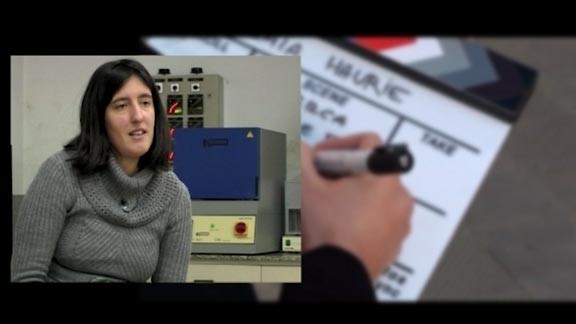
La actividad de esta joven investigadora y profesora se centra en el ámbito de la edificación, y más concretamente en los materiales de construcción y en la simulación de procesos físico-químicos a partir de modelos matemáticos.
Trabaja en proyectos de investigación vinculados al desarrollo de nuevos materiales con prestaciones específicas para su uso en construcción, en el uso de técnicas de diagnosis no destructivas, la evaluación de la eficiencia energética y de las condiciones de confort acústicas, el comportamiento de materiales ante el fuego, la simulación computacional y el diseño de elementos dirigidos a una edificación más sostenible y segura.
Trabaja en proyectos de investigación vinculados al desarrollo de nuevos materiales con prestaciones específicas para su uso en construcción, en el uso de técnicas de diagnosis no destructivas, la evaluación de la eficiencia energética y de las condiciones de confort acústicas, el comportamiento de materiales ante el fuego, la simulación computacional y el diseño de elementos dirigidos a una edificación más sostenible y segura.
Máster universitario en Estudios Avanzados en Arquitectura, especialidad en Restauración y Rehabilitación
Accés obert
2 de jul. 2020
Presentación del máster universitario en Estudios Avanzados en Arquitectura (MBArch) de la Escuela Técnica Superior de Arquitectura de Barcelona (ETSAB), especialidad en Restauración y Rehabilitación Arquitectónica.
Liquids and solids at the same time?
Accés obert
24 de gen. 2011
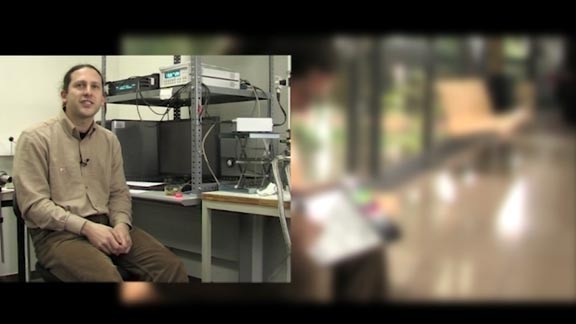
For Luis Carlos Pardo, a good researcher needs to have ‘passion, passion and more passion’. To paraphrase Isaac Newton, a scientist should be like a child playing on the seashore, who is excited to find a pebble or a shell with an unusual shape. Obviously, hard work and perseverance are also required, but ‘they will come easily enough if you are passionate about what you do’.
At first glance, the molecules in a liquid like water seem to be completely disordered. However, upon closer examination, one finds that the space around each one is filled with other molecules, like pieces in a three-dimensional game of Tetris. Thus, order is found in a system that initially seemed to be disordered. This fact is crucial to understanding how certain biological processes involving water work.
This is the line of research being pursued by this young researcher, who is experimenting with neutrons to study the structure of liquids. Luis Carlos is a firm believer in popularising science and would like to see scientific news in the media given greater attention, since, as he puts it, ‘research is also culture’.
At first glance, the molecules in a liquid like water seem to be completely disordered. However, upon closer examination, one finds that the space around each one is filled with other molecules, like pieces in a three-dimensional game of Tetris. Thus, order is found in a system that initially seemed to be disordered. This fact is crucial to understanding how certain biological processes involving water work.
This is the line of research being pursued by this young researcher, who is experimenting with neutrons to study the structure of liquids. Luis Carlos is a firm believer in popularising science and would like to see scientific news in the media given greater attention, since, as he puts it, ‘research is also culture’.
At the frontier of Moore’s Law?
Accés obert
24 de gen. 2011
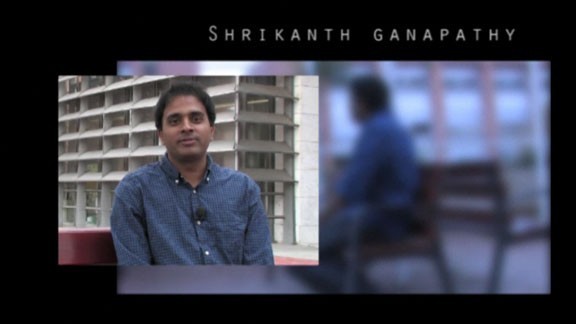
For Shrikanth Ganapathy, research gives him a feeling of great freedom. This feeling has only grown stronger since he embarked on his experience in the city of Barcelona.
Holder of a degree in electronics and communications from Anna University (India), he is a researcher with the Architectures and Compilers (ARCO) Group and is writing his PhD within the framework of the Terascale Reliable Adaptive Memory Systems (TRAMS) research project, which aims to ensure that the memories of the teraflop-capable nanometric processors of the future are robust, reliable, energy efficient, fault tolerant and equipped with a variety of advanced features.
As a result of the constant shrinking of transistors and ensuing improvements in their performance, in accordance with Moore’s Law (named after Gordon Moore, founder of Intel Corporation), within the next decade a single chip should be able to perform trillions of operations per second, thereby enabling data flows of several trillion bytes per second. Such impressive computing capacities will not only transform the processing flows at major data and computer-service centres, but also the power consumption and functional capacity of personal computers, communication devices and all other electronic devices with entertainment and home applications.
Holder of a degree in electronics and communications from Anna University (India), he is a researcher with the Architectures and Compilers (ARCO) Group and is writing his PhD within the framework of the Terascale Reliable Adaptive Memory Systems (TRAMS) research project, which aims to ensure that the memories of the teraflop-capable nanometric processors of the future are robust, reliable, energy efficient, fault tolerant and equipped with a variety of advanced features.
As a result of the constant shrinking of transistors and ensuing improvements in their performance, in accordance with Moore’s Law (named after Gordon Moore, founder of Intel Corporation), within the next decade a single chip should be able to perform trillions of operations per second, thereby enabling data flows of several trillion bytes per second. Such impressive computing capacities will not only transform the processing flows at major data and computer-service centres, but also the power consumption and functional capacity of personal computers, communication devices and all other electronic devices with entertainment and home applications.

¿Satélites para estudiar el cambio climático?
Accés obert
6 d’abr. 2010
Alessandra Monerris cree que una persona que quiera dedicarse a la investigación debe tener una serie de habilidades y competencias: "constancia, perseverancia, capacidad de sintesís y trabajo en equipo, mente abierta, ganas de cuestionarse el porqué de muchas cosas, pero a la vez independencia e iniciativa".
El 2 de noviembre de 2009, la Agencia Espacial Europea ha puesto en órbita el satélite SMOS (Soil Moisture and Ocean Salinity). En la misión, la primera liderada por el Estado español, que permitirá hacer predicciones más precisas sobre el cambio climático, ha participado el grupo que lidera el investigador Adriano Camps, del Departamento de Teoría de la Señal y Comunicaciones. Alessandra ha defendido su tesis doctoral en el marco de las actividades previas al lanzamiento del satélite. Actualmente es directora de SMOS Barcelona Expert Centre (SMOS-BEC).
El 2 de noviembre de 2009, la Agencia Espacial Europea ha puesto en órbita el satélite SMOS (Soil Moisture and Ocean Salinity). En la misión, la primera liderada por el Estado español, que permitirá hacer predicciones más precisas sobre el cambio climático, ha participado el grupo que lidera el investigador Adriano Camps, del Departamento de Teoría de la Señal y Comunicaciones. Alessandra ha defendido su tesis doctoral en el marco de las actividades previas al lanzamiento del satélite. Actualmente es directora de SMOS Barcelona Expert Centre (SMOS-BEC).
