

Objectes multimèdia amb l’etiqueta: Centres docents
Resultats de la cerca
AURS 2012. Àmbit AUTONOMIA / HETERONOMIA
Accés obert
14 de juny 2012
1er Congrés Internacional AURS 2012, Àmbit Autonomia / Heteronomia: presentació d'Antonio Armesto i Cristina Gastón. Ponents: Gabriel Ruiz Cabrero (Per Pepe Coca) i Joao Luis Carrilho da Graça. Fila 0: Josep Ferrando, Arturo Frediani, Daniel Garcia-Escudero, Emiliano López i Jorge Vidal.
AURS 2012. Àmbit INVESTIGACIÓ CREUADA I+D+i(2)
Accés obert
14 de juny 2012
1er Congrés Internacional AURS 2012, Àmbit Investigació Creuada I+D+i: presentació de Carlos Ferrater i Alberto Peñin. Ponents: Vicenç Sarrablo, Ignacio Paricio i Juan Miguel Hernández León. Fila 0: Fernando Cuesta, Borja Ferrater, Moisés Gallego, Iván Shumkov.
AURS 2012. Àmbit INVESTIGACIÓ CREUADA I+D+i(1)
Accés obert
14 de juny 2012
1er Congrés Internacional AURS 2012, Àmbit Investigació Creuada I+D+i: presentació de Carlos Ferrater i Alberto Peñín. Ponents: Vicenç Sarrablo, Ignacio Paricio i Juan Miguel Hernández León. Fila 0: Fernando Cuesta, Borja Ferrater, Moisés Gallego i Iván Shumkov.
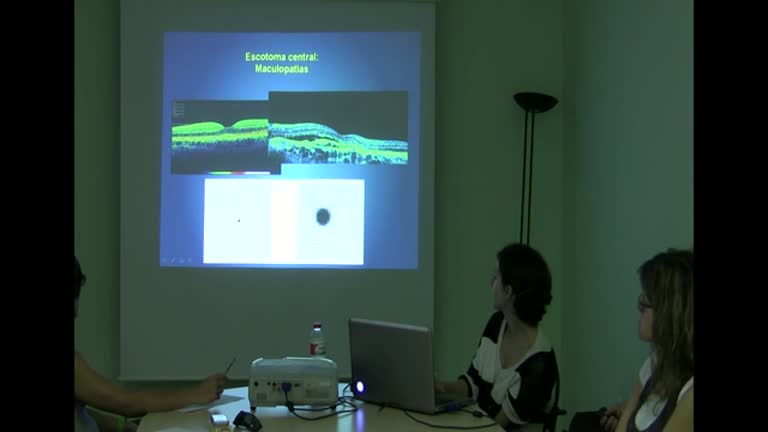
Urgencias oculares para DOO
Accés obert
14 de juny 2012
Conferència feta dins el programa d'estades clíniques tutoritzades al Centre Universitari de la Visió.

AURS 2012. Àmbit REALISME
Accés obert
13 de juny 2012
1er Congrés Internacional AURS 2012, Àmbit Realisme: presentació d'Eduard Bru. Ponents: Jeremy Till, Anne Lacaton, Stephen Bates i Luca Emanueli. Fila 0: Albert Civit, Ignacio Paricio, Lluís Hortet, José Zabala, Xavier Ros, Amadeu Santacana, Ferran Grau.

AURS 2012. Acte d'apertura del 1er Congrés Internacional AURS "Arquitectura Universitat Recerca Societat", 2012. Àmbit RECYCLING.
Accés obert
13 de juny 2012
Acte d'apertura deL 1er Congrés Internacional AURS 2012 amb la intervenció d'Alfred Linares, Director del Departament de Projectes Arquitectònics, Lluís-Xavier Comerón, Degà del COAC i Antoni Giró, Rector de la Universitat Politècnica de Catalunya, UPC. 1er Congrés Internacional AURS 2012, Àmbit Recycling presentació de Cristina Jover i Jaime Coll. Ponents: Pippo Ciorra i Santiago Cirugeda. Fila 0: Josep Bohigas, Eva Prats, Ricardo Flores, Héctor Rivero, Mónica Tárrega, Queralt Garriga, Amaya Martínez i Antonio Sanmartín.
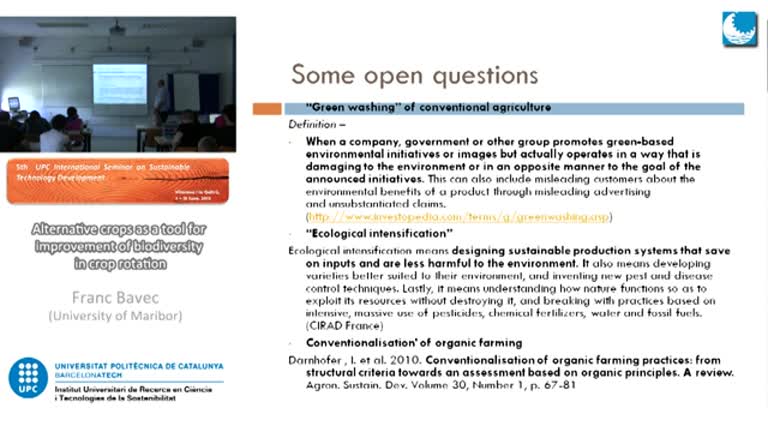
Alternative crops as a tool for improvement of biodiversity in crop rotation
Accés obert
13 de juny 2012
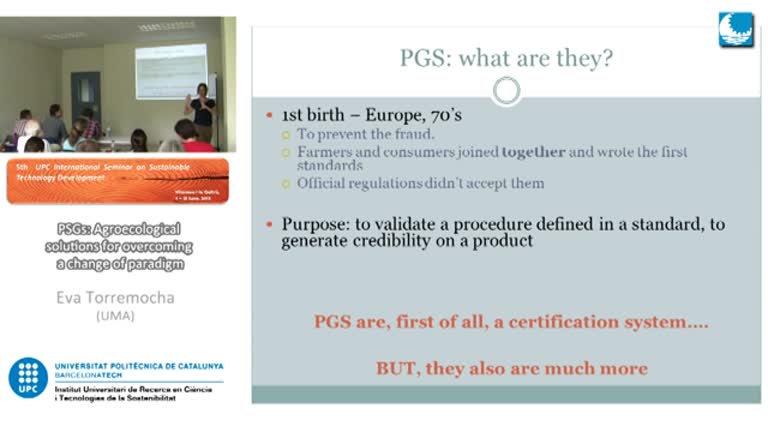
PSGs : agroecological solutions for overcoming a change of paradigm
Accés obert
11 de juny 2012
Participatory Systems of Guarantee (PSGs) arise when proposed by civil society, revolving around the production and commercialization of ecological foods. They are constructed as an alternative to the model of certification by a third party, in order to guarantee that productive initiatives which are not covered by the official system are still able to access the certified product sector / market.
Their dynamism is that they are constantly evaluating and reviewing their structures and procedures, as a result of their constant interaction with their environment. Given this characteristic, in reality PSGs are reaching great levels of complexity, not only internally – as part of the same system – but in a global sense, where organizations are using a number of them in line with diverse criteria.
Their social design and focus on the system, as well as the sensitivity that they show for processes of co-evolution, allow us to visualize them as one of the possible tools that will permit the transition from one system to another.
The systems themselves (integrated in political agroecology), and the activities that they encourage, widen the options for agroecological approaches. These can then be applied in territories that are working towards greater sustainability.
Their dynamism is that they are constantly evaluating and reviewing their structures and procedures, as a result of their constant interaction with their environment. Given this characteristic, in reality PSGs are reaching great levels of complexity, not only internally – as part of the same system – but in a global sense, where organizations are using a number of them in line with diverse criteria.
Their social design and focus on the system, as well as the sensitivity that they show for processes of co-evolution, allow us to visualize them as one of the possible tools that will permit the transition from one system to another.
The systems themselves (integrated in political agroecology), and the activities that they encourage, widen the options for agroecological approaches. These can then be applied in territories that are working towards greater sustainability.
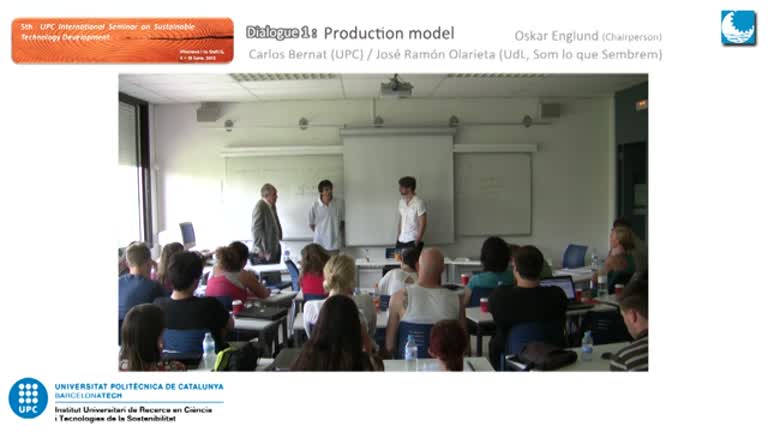
Dialogue 1 : Production model. Ecological agriculture vs "conventional" agriculture. The case for agroecology
Accés obert
7 de juny 2012
Diàleg. Due to global food shortages, some stakeholders defend industrial agriculture versus agroecology
Can agroecology organic production sustain the global population without increasing the land currently under cultivation?
Agriculture can be described in terms of two competing models: On the one hand, the industrial model operates within a productivist industrial discourse. Input intensive monocultural methods have resulted in ecological and socioeconomic negative externalities. These affect not only ecosystem services and rural populations but also reverberate throughout the agrifood system.
On the other hand, agroecology can be placed within a holistic paradigm that promotes interdisciplinary collaboration between researchers, growers, consumers and other stakeholders to work towards an agrarian sector that operates under ecological and socioeconomic principles.
An important argument made by proponents of the industrial model is that ecological models of agriculture do not produce as much food as the conventional model and therefore would cause global food shortages if implemented on a large scale.Questions to speakers
1- Who should benefit from the use of agricultural land? For what uses and needs? Who should decide?
2- What is the role of biotechnology in agriculture? And what is the role in agroecology? Angel and/or devil?
Can agroecology organic production sustain the global population without increasing the land currently under cultivation?
Agriculture can be described in terms of two competing models: On the one hand, the industrial model operates within a productivist industrial discourse. Input intensive monocultural methods have resulted in ecological and socioeconomic negative externalities. These affect not only ecosystem services and rural populations but also reverberate throughout the agrifood system.
On the other hand, agroecology can be placed within a holistic paradigm that promotes interdisciplinary collaboration between researchers, growers, consumers and other stakeholders to work towards an agrarian sector that operates under ecological and socioeconomic principles.
An important argument made by proponents of the industrial model is that ecological models of agriculture do not produce as much food as the conventional model and therefore would cause global food shortages if implemented on a large scale.Questions to speakers
1- Who should benefit from the use of agricultural land? For what uses and needs? Who should decide?
2- What is the role of biotechnology in agriculture? And what is the role in agroecology? Angel and/or devil?
